

Modern businesses across industries depend heavily on linens to maintain smooth operations. Hotels require fresh bedding and towels for every guest, restaurants rely on clean table linens for every service, and healthcare facilities depend on sanitized textiles to support patient care. In these environments, linens move through constant cycles of use, cleaning, and redistribution.
Handling this level of textile demand internally can quickly become overwhelming. Large quantities of linens must be collected, cleaned, inspected, and returned to service every day without disrupting operations. The complexity of this process increases as businesses grow and linen usage rises.
This is why commercial laundry services and linen rental programs have become essential partners for organizations that manage high volumes of textiles. Professional linen providers operate specialized processing facilities designed to handle thousands of pounds of linens efficiently while maintaining strict sanitation standards.
Through advanced equipment, structured workflows, and integrated linen rental systems, commercial laundry services create a seamless solution for high-volume linen processing. Businesses benefit from a dependable supply of clean linens while eliminating the operational challenges associated with managing large-scale laundry operations internally.
Understanding how these services manage high-volume processing reveals why linen rental programs and professional laundry providers are essential to modern business operations.
The Growing Demand for High-Volume Linen Processing
Industries that rely on linens experience significant daily textile turnover. Every hotel guest room requires fresh bedding, every restaurant table needs clean linens, and every healthcare patient uses sanitized sheets and gowns.
Because these items must be replaced frequently, facilities can generate large quantities of used linens within a single day. Managing this volume requires a system capable of processing textiles quickly while maintaining consistent quality.
Attempting to handle high volumes of laundry internally can create operational bottlenecks. Standard laundry equipment may struggle to keep up with demand, and staff may spend excessive time managing washing cycles instead of focusing on primary responsibilities.
Commercial laundry services are specifically designed to address these challenges. Their facilities are built for large-scale textile processing, allowing businesses to handle high linen usage without compromising efficiency or cleanliness.
Specialized Facilities Designed for Large-Scale Linen Processing
Commercial laundry providers operate dedicated processing facilities that are engineered to handle large volumes of textiles every day.
These facilities differ significantly from standard laundry rooms. Instead of small machines operating in limited space, professional processing centers use industrial-scale equipment capable of washing, drying, and finishing massive quantities of linens efficiently.
The facility layout is designed to support continuous workflow. Linens move through a structured sequence of stages that include sorting, washing, drying, inspection, folding, and packaging.
Each stage is optimized to maintain efficiency and sanitation while preventing delays in the processing cycle.
Because these facilities operate with high-capacity equipment and specialized workflows, they can process thousands of pounds of linens in a single day without sacrificing quality.
This infrastructure allows businesses to rely on consistent linen supply even during peak demand periods.
Structured Sorting and Preparation Systems
High-volume linen processing begins with careful sorting and preparation.
Used linens collected from businesses arrive at the processing facility in designated containers designed to protect them during transportation. Once they arrive, trained staff separate the textiles based on fabric type, usage category, and cleaning requirements.
This sorting process is essential for maintaining efficiency and protecting fabric integrity.
Different types of linens require different washing conditions. For example, delicate fabrics may require gentler washing cycles, while heavily used items may need deeper cleaning treatments.
By organizing linens before washing begins, commercial laundry facilities ensure that each textile receives the appropriate cleaning process.
This structured approach improves both cleaning effectiveness and processing efficiency.
Advanced Washing Technology for Large Linen Volumes
One of the most important components of high-volume linen processing is the washing stage.
Commercial laundry facilities use industrial washing machines capable of handling extremely large loads. These machines operate with precise control over temperature, water levels, and detergent concentrations.
High-capacity washing equipment allows large batches of linens to be cleaned simultaneously while maintaining consistent sanitation standards.
These machines are also designed to optimize water and energy usage, making the process more efficient than smaller internal laundry systems.
Because the washing process is automated and carefully controlled, each batch of linens receives the same level of thorough cleaning.
This consistency is essential for maintaining hygiene and fabric quality across large volumes of textiles.
Efficient Drying and Finishing Processes
After washing is complete, linens move into the drying and finishing stage of the processing cycle.
Commercial dryers used in professional facilities are significantly larger and more powerful than those used in standard laundry operations. They are designed to handle heavy textile loads while drying fabrics evenly and efficiently.
Proper drying is essential not only for preparing linens for use but also for preserving fabric quality.
Overheating or uneven drying can damage fibers and shorten the lifespan of textiles. Professional drying systems regulate temperature and airflow carefully to ensure that linens are dried thoroughly without compromising durability.
Once drying is complete, linens are pressed, folded, and prepared for redistribution.
This finishing stage ensures that linens return to businesses in a professional and ready-to-use condition.
Continuous Processing Workflows for Maximum Efficiency
Handling high volumes of linens requires more than just large machines. It requires a carefully designed workflow that keeps linens moving continuously through the facility.
Commercial laundry operations use streamlined processing systems that minimize delays between stages. As soon as one batch of linens completes washing, the next batch is prepared for processing.
This continuous workflow allows the facility to operate at maximum efficiency throughout the day.
Each department within the facility focuses on a specific stage of the process, ensuring that linens move smoothly from collection to cleaning to delivery.
Because the workflow is structured and predictable, businesses can rely on consistent turnaround times even when linen volumes are extremely high.
Integrating Linen Rental for Scalable Linen Supply
Many businesses combine commercial laundry services with linen rental programs to further simplify high-volume linen management.
Linen rental eliminates the need for businesses to purchase and maintain large inventories of textiles. Instead, they receive professionally maintained linens through a managed rental system.
These linens circulate through a continuous cleaning cycle managed by the laundry provider.
When businesses generate high volumes of used linens, rental programs ensure that fresh replacements are always available.
This integrated approach allows organizations to scale their linen usage without worrying about inventory shortages or replacement purchases.
Facilities interested in understanding the financial advantages of rental programs can explore How Linen Rental Services Help Businesses Control Costs, which explains how structured linen systems reduce operational expenses while maintaining reliable supply.
Maintaining Hygiene Standards in High-Volume Processing
Processing large quantities of linens does not mean compromising sanitation standards.
Commercial laundry facilities implement strict cleaning protocols to ensure that every linen item meets professional hygiene expectations.
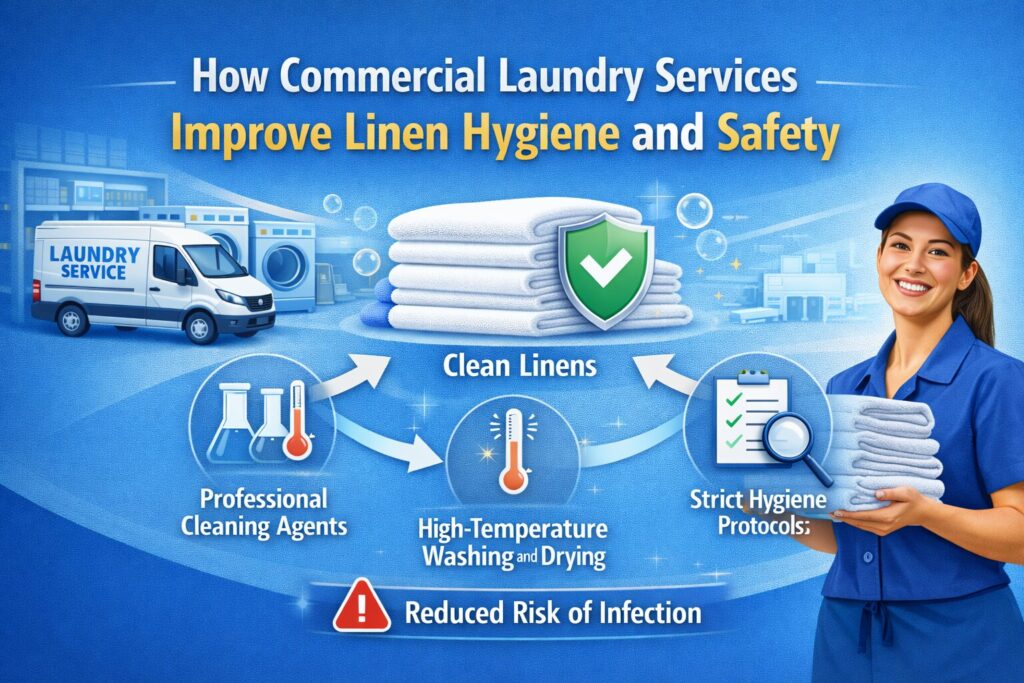
High-temperature washing cycles, controlled detergent formulations, and advanced sanitation techniques eliminate bacteria, stains, and contaminants.
These systems ensure that linens remain hygienic even when processed in extremely large quantities.
Healthcare facilities in particular depend on these sanitation systems to support compliance standards.
Organizations seeking to understand the role of professional laundry services in maintaining healthcare safety can explore Why Commercial Laundry Services Are Vital for Healthcare Compliance, which highlights how structured linen processing supports strict hygiene requirements.
By maintaining reliable sanitation standards across large volumes of textiles, commercial laundry providers help businesses maintain safe and professional environments.
Reliable Delivery Systems for High-Demand Businesses
Once linens are processed and prepared, they must be delivered back to the businesses that rely on them.
Commercial laundry services operate organized logistics systems that ensure linens are returned on schedule.
Delivery routes are planned carefully to match the operational needs of each client. Businesses receive fresh linens through predictable service cycles, ensuring that they always have the textiles needed to maintain operations.
Used linens are collected at the same time, allowing the processing cycle to continue without interruption.
This reliable delivery system ensures that high-volume linen usage never disrupts daily operations.
Businesses can focus on serving customers and managing facilities while the laundry provider handles the logistics of linen circulation.
Supporting Business Growth Through Scalable Linen Processing
As businesses grow, their linen needs increase. Hotels expand room capacity, restaurants increase seating, and healthcare facilities serve more patients.
Without scalable laundry systems, these growing linen demands can create operational challenges.
Commercial laundry services solve this issue by offering processing capacity that grows alongside the business.
Industrial-scale facilities are designed to handle fluctuating linen volumes without compromising efficiency.
Because linen rental programs provide access to professionally maintained inventories, businesses can increase linen usage without purchasing additional stock.
This flexibility allows organizations to expand operations confidently while maintaining reliable linen management systems.
The Long-Term Value of Professional High-Volume Linen Processing
Managing large quantities of linens requires more than basic washing equipment. It requires a carefully designed system capable of handling constant textile circulation while maintaining strict hygiene and efficiency standards.
Commercial laundry services provide exactly that system.
Through specialized facilities, advanced equipment, structured workflows, and integrated linen rental programs, these services transform linen management into a streamlined and reliable process.
Businesses no longer need to worry about managing high-volume laundry operations internally. Instead, they benefit from a professional system that ensures linens are always clean, available, and ready for use.
For organizations that rely heavily on textiles to maintain daily operations, professional linen rental and commercial laundry services provide a powerful operational advantage.
By handling high-volume linen processing with precision and efficiency, these providers support business growth, operational stability, and the professional standards that customers and patients expect.