

Large hospitality chains operate on a scale that demands precision, efficiency, and consistency in every aspect of their operations. From luxury hotel brands with hundreds of rooms to expansive resort networks and restaurant groups serving thousands of guests daily, hospitality organizations depend on systems that can handle high volumes without compromising quality.
Among the many operational systems that keep hospitality businesses running smoothly, linen management stands out as one of the most essential. Bedding, towels, table linens, staff uniforms, and other textiles circulate continuously throughout hospitality properties. These items must be cleaned, sanitized, inspected, and returned to service quickly in order to maintain guest satisfaction and operational flow.
For large hospitality chains, managing this process internally across multiple locations can quickly become complicated and inefficient. This is why many organizations rely on linen processing facilities supported by linen rental services. These professional facilities are specifically designed to handle large-scale linen care while maintaining strict hygiene standards and reliable linen availability.
By partnering with specialized processing centers and integrated rental programs, hospitality chains gain access to a streamlined system that supports operational efficiency, consistent linen quality, and scalable linen management across multiple properties.
Understanding why linen processing facilities are so critical reveals how professional linen services help large hospitality organizations maintain their high standards.
The Massive Linen Demand of Hospitality Chains
Large hospitality chains operate at a scale where linen usage is constant and extensive.
Every hotel room requires fresh sheets, pillowcases, towels, and bath linens. These textiles must be replaced after each guest stay to maintain cleanliness and comfort. In large hotels or resort properties, this process occurs hundreds or even thousands of times each day.
Restaurants within hospitality properties also contribute to linen demand. Tablecloths, napkins, and kitchen textiles must be cleaned and prepared for each dining service.
When these linen needs are multiplied across multiple hotel locations or restaurant properties, the volume of textiles requiring cleaning and redistribution becomes enormous.
Managing such large quantities of linens requires more than basic laundry capabilities. It requires specialized facilities capable of handling continuous textile processing at scale.
Linen processing facilities provide exactly that capacity.
Why Hospitality Chains Cannot Rely on Internal Laundry Systems Alone
While some hospitality properties operate small internal laundry rooms, these systems often struggle to keep up with the demands of large hospitality chains.
Internal laundry operations typically rely on limited equipment and space. Machines must run continuously to process linens, placing strain on both equipment and staff.
As the volume of linens increases, several challenges begin to appear. Laundry bottlenecks can delay room preparation, equipment maintenance becomes more frequent, and staff workload increases significantly.
These challenges become even more complex when hospitality chains operate multiple properties across different locations.
Linen processing facilities eliminate these operational limitations by providing centralized processing systems designed specifically for large-scale textile care.
By outsourcing linen cleaning and management to professional facilities, hospitality chains ensure that linens are processed efficiently without placing unnecessary pressure on internal resources.
Specialized Infrastructure Built for High-Volume Linen Processing
One of the main reasons linen processing facilities are critical for hospitality chains is their specialized infrastructure.
These facilities are designed to process large quantities of textiles quickly while maintaining consistent sanitation standards.
Industrial washing machines can handle extremely large loads of linens, while high-capacity dryers ensure that textiles are dried evenly and efficiently. Automated folding and finishing equipment prepares linens for immediate use upon delivery.
The layout of a processing facility is carefully organized to support continuous workflow. Linens move through stages that include sorting, washing, drying, inspection, folding, and packaging.
Each stage is optimized for efficiency, allowing thousands of linens to be processed every day without delays.
This infrastructure ensures that hospitality chains always have access to clean linens regardless of how high the demand becomes.
Businesses interested in understanding how these systems operate can explore How Commercial Laundry Services Handle High-Volume Linen Processing, which explains how professional facilities manage large-scale linen cleaning efficiently.
Maintaining Consistent Quality Across Multiple Locations
Consistency is one of the most important factors for hospitality brands.
Guests expect the same level of cleanliness and comfort regardless of which property they visit. Hotel linens must feel fresh, soft, and professionally maintained every time.
Linen processing facilities help hospitality chains maintain this consistency by using standardized cleaning processes across all textiles.
Controlled washing cycles ensure that linens are cleaned thoroughly without damaging fabric fibers. Professional drying systems maintain softness while preventing shrinkage.
Because the cleaning process follows strict protocols, linens from different properties are processed with the same level of care and attention.
This consistency supports brand reputation and ensures that guests experience the same level of quality across all hospitality locations.
Integrating Linen Rental Services for Large Hospitality Operations
Many hospitality chains enhance their linen management systems by combining processing facilities with linen rental services.
Linen rental programs provide businesses with access to professionally maintained linens without requiring them to purchase large inventories.
Instead of managing linen ownership internally, hospitality chains receive linens through a structured rental agreement. These textiles circulate continuously through the processing facility where they are cleaned, inspected, and prepared for reuse.
When linens show signs of wear, they are replaced within the rental program, ensuring that hospitality properties always receive textiles in excellent condition.
This integrated system eliminates the need for businesses to track linen inventory, manage replacement purchases, or monitor textile quality.
Linen rental services simplify the entire linen lifecycle, making them particularly valuable for hospitality chains that operate across multiple locations.
Supporting Reliable Linen Supply for Large Properties
Large hospitality properties cannot afford disruptions in their linen supply.
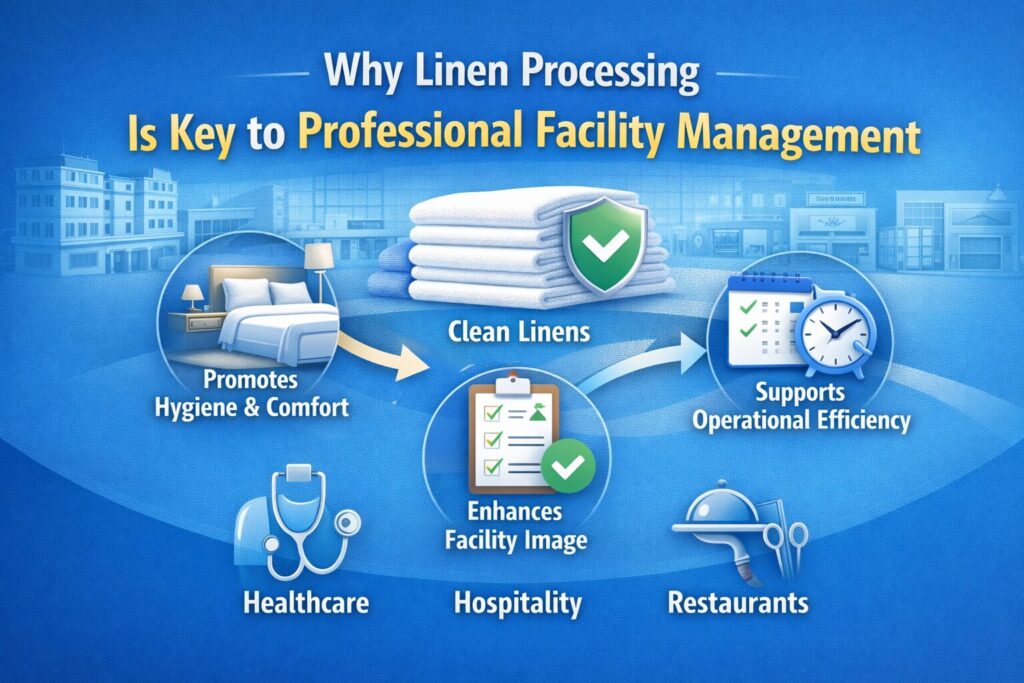
Housekeeping teams rely on clean linens to prepare rooms quickly between guest stays. Restaurants within hotels depend on fresh table linens for each dining service.
Without a dependable linen supply system, operations can quickly slow down.
Linen processing facilities support reliable linen availability through structured service schedules. Used linens are collected regularly, processed through the facility, and returned as part of an organized delivery system.
Because the process operates continuously, hospitality properties always receive fresh linens when they need them.
This reliability allows hotels and restaurants to maintain efficient operations even during busy seasons or large events.
Hospitality organizations seeking insight into why professional linen services are so widely used in the industry can explore Why Restaurants and Hotels Use Commercial Laundry Services, which highlights how professional laundry systems support hospitality operations.
Protecting Hygiene Standards in High-Volume Environments
Hygiene is a critical priority in hospitality environments.
Guests expect linens to be perfectly clean, free of stains, and sanitized properly. Any failure to maintain these standards can affect guest satisfaction and damage the reputation of the brand.
Linen processing facilities maintain strict sanitation procedures designed to eliminate contaminants effectively.
High-temperature washing cycles remove bacteria and allergens, while professional detergents ensure that stains and odors are eliminated.
Because these facilities follow standardized sanitation protocols, hospitality chains can trust that linens meet high hygiene standards after every processing cycle.
Maintaining this level of cleanliness is essential for protecting guest comfort and reinforcing brand trust.
Reducing Operational Burden for Hospitality Staff
Managing laundry internally requires significant staff involvement.
Employees must collect used linens, operate washing machines, monitor drying cycles, fold textiles, and distribute clean linens throughout the property.
For large hospitality chains, these tasks can quickly consume valuable staff time that could be better spent focusing on guest service.
Linen processing facilities remove this burden by handling the entire cleaning and preparation process externally.
Used linens are transported to the processing center, and fresh textiles are delivered back to the property ready for immediate use.
This allows hospitality staff to concentrate on their primary responsibilities—serving guests and maintaining high service standards.
Allowing Hospitality Chains to Scale Efficiently
Hospitality brands are constantly evolving. New hotels open, existing properties expand, and restaurant operations grow.
As these organizations scale, their linen needs increase significantly.
Managing this growth internally can create logistical challenges if laundry infrastructure and linen inventories are not designed to support expansion.
Linen processing facilities supported by rental programs offer a scalable solution.
Because these facilities operate with high-capacity equipment and large textile inventories, they can easily accommodate increased linen demand.
Hospitality chains can expand operations without worrying about upgrading internal laundry systems or purchasing additional linens.
The service provider adjusts supply and processing capacity as needed, allowing businesses to grow smoothly.
Maintaining the Professional Presentation Guests Expect
Linens are one of the most visible elements of the hospitality experience.
Guests notice crisp hotel bedding, soft towels, and clean restaurant tablecloths. These details contribute significantly to the overall perception of quality and comfort.
Linen processing facilities ensure that these textiles remain in excellent condition through professional cleaning and inspection processes.
By maintaining fabric quality and cleanliness, professional facilities help hospitality chains deliver the polished presentation that guests expect.
This attention to detail reinforces brand identity and enhances the overall guest experience.
The Strategic Importance of Linen Processing Facilities
Large hospitality chains require operational systems that can support high demand, maintain consistent quality, and scale with business growth.
Linen processing facilities supported by linen rental services provide exactly that solution.
Through specialized infrastructure, standardized sanitation processes, and organized linen distribution systems, these facilities simplify large-scale linen management.
Hospitality chains benefit from reliable linen availability, reduced operational complexity, and consistent textile quality across multiple properties.
Most importantly, they gain a professional linen management system that supports the cleanliness, comfort, and presentation that guests expect from top hospitality brands.
For organizations operating in the competitive hospitality industry, partnering with professional linen processing facilities is not just a logistical decision—it is a strategic advantage that ensures operational stability and exceptional guest experiences.